Your Price: $6.96

Remember these 5 rules and stop being among those guys that die at the beginning of the game.


50 Coloring Pages
~ Characters ~
20 Coloring Pages
~ Weapons ~

as
All subject


Waw that's Helping players level quickly through WoW since 2006!
- TBC Classic Leveling Guides Are Now Available! -
You can now order my TBC Classic leveling guides here!
My TBC Classic speed leveling guides contain 60-70 Outland for both Horde and Alliance along with 12-20 Bloodmyst Isle and 12-20 Ghostlands.
My Classic 1-60 Guides are updated for TBC.
You can login/order the 12-60 guides here!

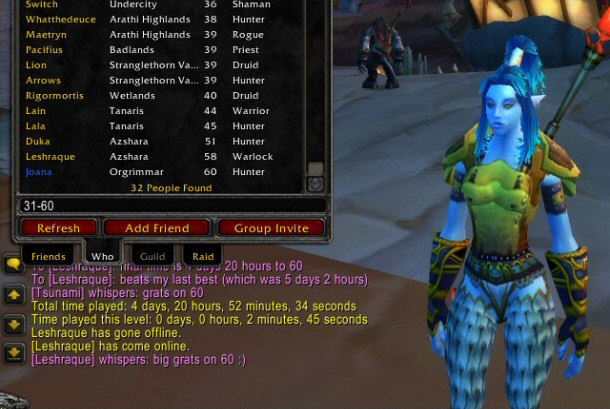
World Record fastest time through Vanilla WoW 1-60 in 4 days 20 hours
Horde 1-70![]() | Alliance 1-70![]() |
New for Classic WoW / TBC
New Improved Web Guides
New Guide Features
In-Game Guide versions are Coming
My In-game guide version of my leveling guides are still being worked on and should start to be available soon. I suspect that the 60-70 Outland content would be finished first followed by the rest of the content. It will probably take a number of months before it's fully finished. But for now, the web guides are in really good shape to use.
What is this site about??
Vanilla 1-60 WoW was a huge speedrun project I worked on full time from 2004 - 2007 during the times of 1-60 Vanilla WoW. After a number of attempts speedrunning 1-60 WoW I have produced a very useful 1-60 Vanilla WoW Horde leveling guide and a 1-60 Vanilla WoW Speedrun Video. Recently, I now have fully remastered my 1-60 Horde leveling guide for Classic WoW and have made a full 1-60 speed leveling guide for Alliance as well.
You can find a lot more info, including screenshots of my 1-60 speed leveling journeys here.
TBC Classic Leveling Guides are Here!
Blizcon 2021, February 19th, they announced that TBC Classic will be happening and launching June 1st 2021. I have been dedicating full time on making leveling guides for TBC Classic and I have produced high quality of polish for these leveling guides to make your journey through Outland seamless and fun! You can order my TBC speed leveling guides here!
Purchase my Classic WoW leveling guides:
All my 1-12 starting area guides are free to use to see how you like using my leveling guides. You can then purchase a one-time membership to have access to the 12-60 content. I offer a 60 day zero risk offer: you can try it for a full 60 days and if you are unsatisfied for any reason you can simply ask for a refund. You will find the order link for the members area by clicking on any of the 12-60 content.
Feel free to follow me on Twitter, Facebook, Youtube and Twitch. My real gamer name is FuriousPaul, while Joana is the name of my WoW character. I will continue to use "Joana" for all my WoW endeavors.

Waw that's
1-60 Horde Leveling Guide
12-15 Barrens
15-16 Stonetalon
16-20 Barrens
20-21 Stonetalon Mountains
21-22 Ashenvale
22-23 Southern Barrens
23-25 Stonetalon
25-25 Southern Barrens
25-26 Thousand Needles
26-27 Ashenvale
27-28 Stonetalon Mountains
28-29 Thousand Needles
29-30 Hillsbrad Foothills
30-30 Arathi Highlands
30-31 Stranglethorn Vale
31-32 Shimmering Flats
32-34 Desolace
34-36 Stranglethorn Vale
36-37 Arathi Highlands
37-37 Alteric Mountains
37-38 Thousand Needles
38-38 Dustwallow Marsh
38-40 Stranglethorn Vale
40-41 Badlands
41-42 Swamp of Sorrows
42-43 Stranglethorn Vale
43-44 Dustwallow Marsh
44-44 Desolace
44-45 Tanaris
45-46 Feralas
46-47 Azshara
47-47 Hinterlands
47-47 Stranglethorn Vale
47-48 Searing Gorge
48-49 Swamp of Sorrows
49-49 Dustwallow Marsh
49-49 Feralas
49-50 Tanaris
50-50 Azshara
50-51 Hinterlands
51-51 Blasted Lands
51-53 Un'Goro Crater
53-53 Burning Steppes
53-54 Azshara
54-54 Felwood
54-55 Winterspring
55-56 Felwood
56-56 Western Plaguelands
56-57 Eastern Plaguelands
57-58 Western Plaguelands
58-59 Silithus
59-60 Winterspring

1-60 Alliance Leveling Guide
12-17 Darkshore
17-18 Loch Modan
18-20 Redridge Mountains
20-21 Darkshore
21-22 Ashenvale
22-23 Stonetalon Mountains
23-24 Darkshore
24-24 Ashenvale
24-27 Wetlands
27-28 Redridge Mountains
28-29 Duskwood
30-30 Wetlands
30-30 Ashenvale
30-31 Wetlands
31-32 Hillsbrad Foothills
32-32 Arathi Highlands
32-33 Stranglethorn Vale
33-34 Shimmering Flats
34-36 Desolace
36-37 Stranglethorn Vale
37-37 Alterac Mountains
37-38 Arathi Highlands
38-39 Dustwallow Marsh
39-40 Stranglethorn Vale
40-41 Badlands
41-42 Swamp of Sorrows
42-42 Stranglethron Vale
43-43 Desolace
43-44 Tanaris
44-46 Feralas
46-46 Azshara
46-46 The Hinterlands
46-47 Stranglethorn Vale
47-48 Searing Gorge
48-49 Feralas
49-49 Dustwallow Marsh
49-50 Tanaris
50-50 The Hinterlands
50-51 Blasted Lands
51-52 Un'Goro Crater
52-53 Azshara
53-54 Felwood
54-54 Winterspring
54-55 Felwood
55-56 Burning Steppes
56-56 Western Plaguelands
56-57 Eastern Plaguelands
57-58 Western Plaguelands
58-58 Felwood / Azshara
58-58 Tanaris / Un'Goro
58-59 Silithus
59-59 Eastern Plaguelands
59-60 Winterspring
Waw that's
- Now Available Waw that's
+ Automated Script Writing -Instantly generate scripts and content for any video, in any niche, with just a simple keyword!Replace them with fun, dynamic and engaging animated videos and watch your leads and sales skyrocket!
And with our professional templates for a huge variety of niches, making videos for “brick-and-mortar business” clients for big bucks has never been easier!
Regardless of your current business, we’ll show you how to EASILY create a hot new revenue stream with AnimationStudio (commercial license included)!

Before AnimationStudio Came Along, You Needed Serious Creative Talent
Super-Expensive Software (and Hardware),
… Or A Budget That Only Fortune500 Companies Can Afford!
: Early this year, when domestic flights began transporting hope in the form of Covid vaccines, a seaplane took off on its maiden flight from a river near coastline
carrying hope of a different kind. It was arguably India’s first ever home-made seaplane, flown by a farmer who till then had never piloted a plane.
Unlike the experimental aircraft assembled in other countries, this one built at a cost of Rs 7 lakh wasn’t a `kitplane’. Named `Drithi’ which stands for courage, the seaplane was true to her name. But for the Italian engine, the entire plane was made from scratch in a tarpaulin hangar rigged up on a coconut plantation in Nadikudru, in Udipi district. Drithi was `Atma Nirbhar’ to a fault. After its January 19 maiden successful flight, the seaplane did about ten successful flights, soared to about 50 feet over the river Shambhavi, before it ended up as an unreported casualty of cyclone Tauktae.

Nadikudru is a triangular-shaped river island, nestled in a crook along the Karnataka coastline, lying aft the Arabian sea and about 30 kms north west of Mangalore. Downstream its river Shambhavi tourist groups guided by instructors work their oars in rented kayaks chasing an adrenaline rush. But on a quiet winter morning on January 19, the river turned into a runway, while the fronds of palms along the
river bankdoubled as wind socks to indicate a light breeze.
Pushparaj
Ameen, an aero-modeller, but now a full-time paddy farmer waded into the backwaters to find a spot to assemble the six components of his home-made sea plane. Tailing the 38-year old was his team, a motley group of eight, all in their twenties, all first-time plane makers. Made with aviation grade aluminum, extruded foam and epoxy resin coated fabric, the minimalist seaplane had a skeletal fuselage, two wings, two floats, an engine and stabilizers. Before each flight, the team carried the six components to assemble the plane in the river shallows.

In about 20 minutes, the team attached the floats and wings to the fuselage, which was mounted on front with a gasoline-fired `Simonini mini 2 evo’ , a made-in-Italy two-stroke single engine that generates 33 hp (Horsepower) at 8000 rpm (rotations per minute). The smallest of the cars run on about 100 hp engine, but the Simonini engine’s ponypower is enough to fly an ultralight aircraft, planes that weigh less than 115 kg. This one weighed 99 kg.
Ameen took boarded the plane, strapped into his seat, checked the only two controls the seaplane had, that is, rudder and elevator for basic movements. Unlike conventional aircraft, the Drithi’s wings had no ailerons__flaps along a wing’s trailing that afford differential lift to executive a turn. She also had no navigational instruments. No airspeed indicator, no altimeter, no direction gyro, no artificial horizon, nothing. It an aircraft was ever employed to showcase the word rudimentary, this was it.
I am not a trained pilot. My heart was pounding fast," said Ameen. Before this he had never piloted an aircraft. But he had decades of experience as an aero-modeller. His team stood by the river bank, eager spectators waiting for the first test flight. Ameen pushed the throttle, the engine spurred shattering the quiet of the morning and the seaplane sped forth, balancing on its floats. "In less than 20 seconds, Drithi had crossed 100 metres. By now, the aircraft was on full throttle, I could feel the lift on the wings," he said. "Since I have experience flying remote control aircraft I know aircraft behaviour. With those concepts in mind, I manoevered," he said.

Ever-so-slightly he pitched the plane’s nose up and the floats lifted off water as the aircraft soared, tentatively, like a fledgling on its maiden attempt to fly. Seeing it airborne, the team let out a roar of delight. "I had butterflies in my stomach. I thought the plane had climbed very high. I left the throttle, adjusted the rudder and elevator and landed. Our first flight must have touched 10 feet," he said. The aircraft was airborne for about five seconds during its maiden flight.

In the next 16 weeks, the seaplane operated about 13 test flights and the aircraft soared to about 50 feet, keeping its track over the river, never to venture on land, said Ameen. And then, all of a sudden it was over. In May, cyclone Tauktae destroyed the aircraft and left it beyond repair. " It would cost Rs 4 lakh to repair it, but I don’t want to. I have other plans," said Ameen.
"My dream is also to meet PM Narendra Modi once," Ameen said. He hoped his seaplane, as "Atma Nirbhar Bharat" airplane building project would make that happen. But the team heardly received any recognition. There are other disappointments too. "Karnataka government announcement a reward of Rs 5 lakh as token for achievement. The amount was sanctioned in February, but till today I haven’t received it. Now they tell they don’t have funds.

THE HURDLES AND VICTORIES
Aernoautical engineer Shayani Rao, from the team said: "You can see on youtube and other online resources that generally during the maiden flight there is always some problem, some damage. Some part or component that didn’t work as expected, a ring breakage here or a technical issue there. But our maiden flight was successful and so were the rest, which is not a mean feat because we designed, built and operated the plane without even the basic facilities.”
Though Ameen had readied the design earlier, the fabrication began in November 2019. "Each and every material procurement has a story because it has come from different parts of India. For instance we sourced extruded foam from Bangalore. But we had to select from 50 different types of foam keeping in mind the design of the aircraft. The extruded foam available in the market was for purposes like insulation, the sellers had no idea about its use in aircraft building," she said. Then there was the issue of tools and infrastructure. "For the first time in India an aircraft was designed and built to safely carry a person with no research to fall back on, no infrastructure, no help from government. We had Ameen’s vision of what the aircraft design would be like. But to execute it we had no sophisticated tools, we worked with screwdivers, cutters, the basic tools that a garage would have. When one talks about aircraft building in today’s times, one thinks of 3D printing technology, specialized tools," she said.
Once the components were built, the team carried out basic testing. The fuselage was balanced along a fence to determine its centre of gravity, the top portion of the wing was pulled with force by one while the others held on the to the bottom to do the wing loading test, the floats were tested near the mangrove grooves. The team always assembled the aircraft on the river to ensure that the mangroves were left undamaged, Ameen said.
THE CHILDHOOD DREAM
For Ameen, the process began with realizing a childhood dream. "When I was in sixth standard , the
cadets had done a model aircraft flying show in Mangalore stadium. That is when I decided that one day I will build and fly an aircraft," said Ameen. Then as a teenager he came across a book called "Vichitra Vimana" by K S Raman. It had information and specifications on different aircraft models. "That changed my mind and I was completely into aero modelling. I created a static model, a Piper Seneca made from local wood. I am from a rural area and I don’t have access to sophisticated tools or high level facilities. I sent it to Raman Sir. He was interested in it and he asked me to work in ENR model in Bangalore, an aeromodelling company," he said. In 2010, Ameen was appointed on contract as an aeromodelling inspector in NCC sixth Karnataka air squadron in Mangalore. His meagre salary went from Rs 10,000 to upto Rs 18,000, he would supplement income by helping engineer students with their projects. Then he was laid off in 2019 and decided to take up his dream project.
THE TEAM AND THEIR DISAPPOINTMENT
Among the other members of the team were Abhishek Kotian, mechanical engineer and a professional drone pilot, Vinaya U, a trainee pilot, Utsav U, an aeronautical engineer, Reshma Bangera, a commerce post-graduate, Vasuraj Ameen, a yacht captain and Ashwini Rao, a psychology graduate. The whole effort didn’t receive the kind of attention it should have, the team feels.
Rao said: "The maiden flight of the aircraft was in January 2021, in the next five months there was no support from any government or recognition. In a single place like Mangalore every year, thousands of students earn their engineering degrees. But there are no job opportunities and no interest in the field, especially, for aeronautical engineering. Then they eventually join some software company, not because they are interested in the field, but because there was no option”. Because there was no facility to keep the aircraft components safe, it was damaged in the cyclone. "Financial help and support from the state and central government is very much needed in this field. We are asking for workshop, sophisticated tools, exposure and support," she said.
Ameen wanted to provide youngsters with hands-on experience, practical knowledge on aircraft making. But the dream has come at a heavy cost. "Financially I am in dire straits. I invested the entire savings from my meagre earnings.” All that remains now are memories of flight and videos, pictures of the incredible plane making process along with a realisation that such experiments rarely receive backing from the government.

Mumbai: Parked SUV sinks into well as slab caves in at Ghatkopar society, no injuries
Sexagenarian Yamnaji Ghule is a worried man. The second generation dabbawala is not sure of what to make of his future emerging from a pandemic that dished out a blow to the humdrum of his decades-old vocation of delivering cooked lunches to Mumbai’s office-goers.
“We’ve worked through the worst situations... rains, floods, terror attacks but never seen anything like this before. My team of seven
dabbawalasused to make around 20 deliveries in a day between Mahim-Worli-Sion and now not more than four,” said the veteran tiffinwala who had returned to his village Rajgurunagar in the Khed taluka of Pune to farm for his survival for the first eight months of the pandemic. “I came back to Mumbai in January when deliveries restarted but it’s stopped again. I’ll have to wait and watch. I’ve been doing this for more than 40 years, it’s the only work I know,” he frets.
Mumbai’s 130-year-old dabba distribution fleet has been a legendary workforce of 5000 tiffin carriers like Ghule — picking up food from home cooks and delivering to two lakh office-goers on their cycles and local trains — to meet the daily “tiffin” needs of the city’s rapidly expanding working population.
As
Covidchanged culinary culture, delivering hot lunches that would fetch dabbawalas a monthly earning of Rs 14,000 to 20,000 was suddenly down to nil. Following lockdown, around 3000 dabbawalas — mostly from Pune, Junnar, Ambegaon, Mulshi, and other parts of Maharashtra — retreated to their hometowns. “When offices started opening up last June, we were able to restart our services but with 300-400 dabbawalas. Now in the second lockdown, there’s work for only 100-150,” explained Ulhas Shantaram Muke, president of the Nutan Mumbai Tiffin Box Suppliers Charity Trust, ruing the loss of old customers who had transitioned from “once-in-a-while” cook to a new work-from-home normal of realising the virtues of cooking at home.
Struggling to resume services, they found a new breed of tiffin takers — Covid care facilities, people in home quarantine, isolation centres and healthcare workers in hospitals. Even as some took to moonlighting as watchmen or tied up with farmers to deliver fresh produce, and found a helping hand from restaurateurs like Riyaaz Amlani who teamed up with them to tide over losses, it wasn’t enough to sustain. Mumbai’s dabbawalas saw their business plunge by nearly 90% with most offices in Mumbai still closed.
But there is no turning back the wheel. The world of lunchbox carriers has been a resilient lot — constantly reinventing itself — English lessons, computer literacy, women entering the all-male bastion and ditching bicycles for motorbikes. Looking for fresh ways to tackle the new world order and their trade, the modern dabbawala — increasingly intuitive about the sway of digital marketing and food delivery startups — is in for yet another change.
The tiffin carriers will no longer just be dropping off lunch boxes at people’s homes but will also be rustling up a seven-day rotating menu of lightly-cooked home-style lunches in a “cloud kitchen”, aimed at time-starved millennials.
“We’ve taken up a 1000 sq ft community kitchen in
that was lying unused in the pandemic. Some of our dabbawalas and their wives are currently being trained by an F&B expert on hygiene, storage and culinary skills and we should be ready to launch our new service by mid-June,” informs Ritesh Andre, 25 a fourth generation dabbawala with an MBA degree who chose to use his skills to reinvent a culture founded by his great grandfather.
“Our dabbawalas aren’t tech savvy like the delivery boys in e-commerce. The idea is to use their unique sorting skills to diversify, generate employment, bring stability and pride in what is India’s oldest food delivery chain,” explains Andre pointing at their intrepid new avatar which will allow people to choose between mini meals (two rotis and two sabjis) and regular meals (two rotis, two sabjis, a portion of rice and dal, pickle, papad and salad) — which dabbawalas will prepare, pack and deliver from Dahisar to Churchgate and Ghatkopar to CSMT in specially designed two-tier and four-tier dabbas — in a fresh twist to their colour-alphabetic-numeric colour
Federal Reserve: The market participants have a lot of expectations from 16th June Fed monetary policy. Two key factors which Fed focuses on are inflation and job numbers. The core PCE (Personal Consumption Expenditures) to be the best gauge of inflation rose faster than expected at 3.1% in April as price pressures built in the rapidly expanding U.S. economy. But the job report is still not upto the mark that fed considers for tapering. Apart from this, an interesting observation in the fed’s balance sheet suggests something is cooking. Under QE, fed is buying $120 billion securities & bonds and flowing liquidity in the market. But since April, Fed has come up with Overnight Reverse Repo-ON RRP (Fed borrows from US commercial banks to control excess liquidity) and pulled out $8.8 trillion from the market. As liquidity stopped increasing, risk-on asset-equity stopped performing like what it was before April.
This can be compared with the 2013 taper tantrum case when along with QE, the fed had done the same ON RRP and then we had seen the announcement of tapering. Overall, fed is expected to announce tapering, either in June or in August’s Jackson Hole meeting or finally in the September meeting. The higher vaccination rate, Biden’s infra spending, and stronger economic data will force fed to talk on tapering very soon. Hence, we expect that Fed would be the first central bank (Like 2013) to go hawkish.
2. Bank of England: The UK which has undoubtedly carried their vaccination program extremely well, and has good chances of reopening on June 21; just before BoE revisits their policy on June 24. However, the Indian variant or so-called Delta variant possesses a risk over its potential to undo some of the country’s hard-won progress toward reopening. On the data front, retail sales and the manufacturing number have been above estimates, but growth figures need to pick up well in the upcoming time. In the last meet, BoE had already announced to slow down their bond-buying to £3.4bn a week between May and August, from the current pace of £4.4bn, but made it clear that this should not be taken as a change in the stance. One MPC member was already turned in favor of tapering, and probably many will join him in the upcoming meet if the economy outperforms and inflation persists above 2% levels. The BoE stands just behind Fed to turn hawkish and do tapering
3. European Central Bank: The ECB monetary policy which is scheduled to meet this week on 10th June will be a non-event but very exciting. Because since the April meeting, the European countries have done a remarkable job in rolling out the vaccination drive. That has helped them to think over reopening like the US. The economic outlook has brightened further and inflation forecasts are expected to revise higher. Another interesting element will be the first official quarterly assessment of financing conditions in the Eurozone will be presented. The German bund yield has been in negative territory over the last 2 years, was seen recovering almost 50 bps from 2021 low of -0.60 as recovery is discounting in yield. The ECB could avoid the discussion on tapering, but for that strong reasoning needs to be presented or else doubts on the sustainability of the economy and euro will come under question. Compared to Fed and BoE, ECB still lags in terms of going for tapering as many European countries are still facing higher debt issues and rising rates will also increase their cost of debt. Hence, ECB could stay behind Fed and BoE.
Below are key facts on all 3 countries that you must look upon.